Beyond the Weapon
Carrying a firearm is a serious decision. Whether it resolves the capability gap is separate, worth the scrutiny of any other high-stakes assumption.

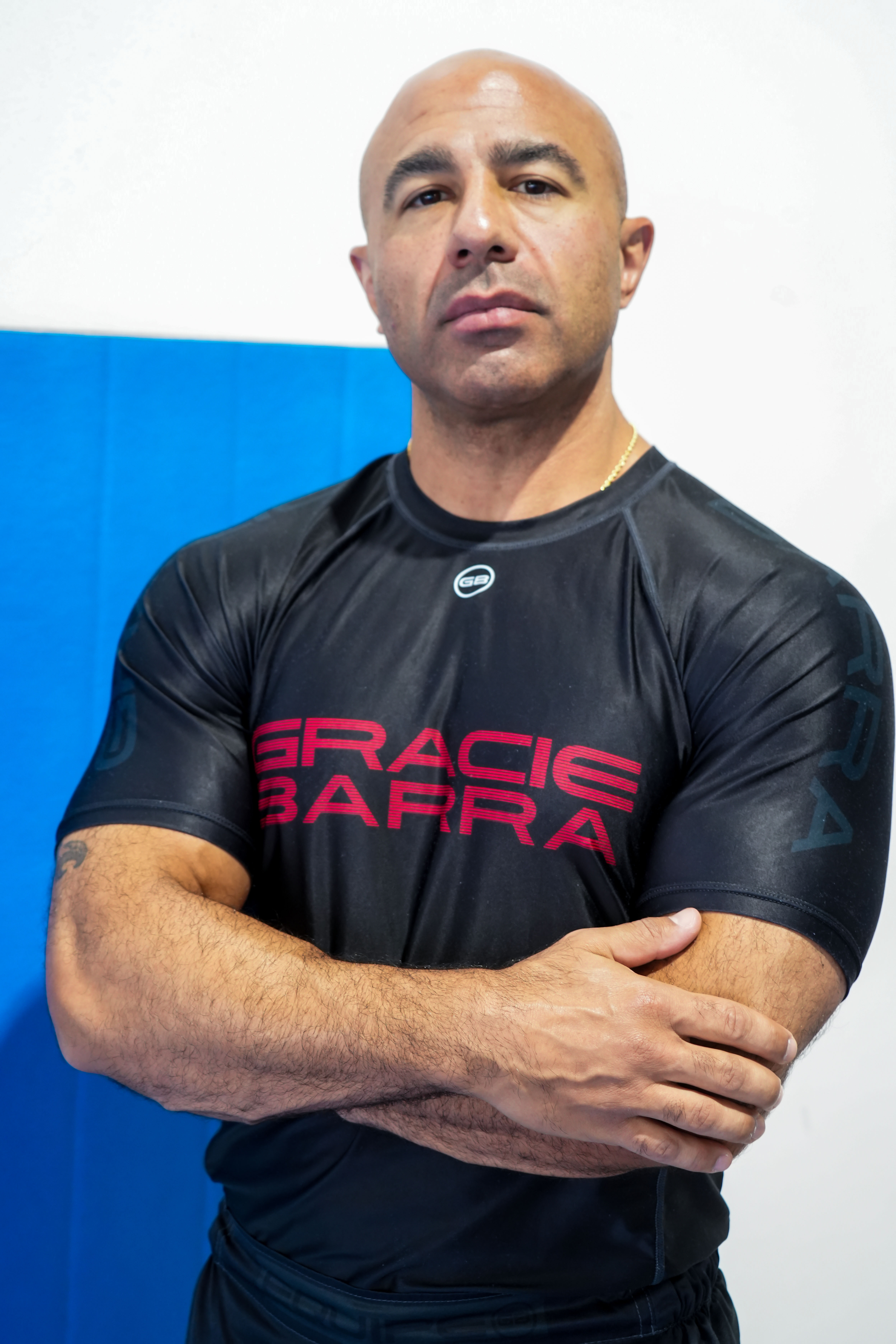
Most executives who carry a firearm have thought carefully about the decision. They have acquired the weapon, obtained the license, and spent time at the range. They carry because they have decided the responsibility of protection is theirs; for themselves, for their families, for the people who depend on them. That instinct is correct. The question this piece examines is not whether to carry. It is what carrying actually provides and what it does not.
This distinction matters because the gap between those two things is where most executives are exposed.
What the Firearm Actually Provides
A firearm carried by someone trained to use it is a genuine capability. At distance, with sufficient reaction time, against a threat that has not yet closed to contact, a firearm is the most effective defensive tool available. It extends protective reach beyond what any physical skill set can match. In the specific scenario it was designed for there is no substitute: a clear threat, at distance, with time to process and respond.
The deterrence value is also real. The knowledge that a person is armed changes their perspective, their decision-making, and in some cases their visible presence in a way that affects how they move through the world. That is not nothing.
The argument here is not against any of that. It is for accuracy about the conditions under which those advantages hold, and the conditions, far more common in an executive’s real threat environment, under which they do not.
The Draw Problem
In 1983, Sergeant Dennis Tueller of the Salt Lake City Police Department published research that changed how law enforcement thought about threat distance. The Tueller drill, or 21-foot rule as it became known, demonstrated that a motivated attacker can cover 21 feet in approximately 1.5 seconds. That is roughly the same time it takes a trained officer to draw, aim, and fire from a holstered weapon.
Two things follow from this that most people who carry have not fully reasoned with.
First, 21 feet is not a large distance. It is the length of a typical hotel corridor section, the span across a restaurant seating area, the distance from the edge of a parking space to the next row. In the environments executives actually move through, 21 feet of unobstructed distance with a clearly identified threat and time to process it is not the common case. It is the exception.
Second, the 1.5-second figure assumes a trained officer with the weapon already in hand or in a dedicated holster with a practiced draw. For a civilian carrying concealed often in a crossbody bag, a jacket pocket, or an inside-the-waistband holster under untucked clothing, the draw time is meaningfully longer. The research on untrained or lightly trained civilians suggests draw times of 2.5 to 4 seconds under ideal conditions, rising sharply under stress.
The honest arithmetic: if the threat has already closed inside 21 feet when it is recognized, the firearm is frequently not drawable in the time available. This is not a deficiency of a particular weapon or holster. It is a physics problem.
When the Encounter Has Already Started
The Tueller research addresses a specific scenario: a threat identified at distance before contact. The more common class of incidents executives face does not look like that.
Most real-world physical confrontations do not begin with a clearly identified threat at distance. They begin as ambiguous social situations such as a verbal exchange that escalates, an aggressive approach in a confined space, or a confrontation that moves from words to contact in seconds. The transition from ambient threat to physical contact often happens before the executive has consciously registered that a physical response is required.
In that class of incidents, the firearm in the holster is not a defensive option. It is a complication.
A weapon in a holster during a grappling encounter creates specific and serious problems. It is accessible to the attacker as well as the defender. In a close-quarters struggle, maintaining weapon retention while also managing a non-compliant attacker requires training that is entirely separate from marksmanship, and that most concealed carriers do not have. The weapon that was acquired for protection can become a liability in the scenario it was never designed for.
The question worth sitting with: what is the executive’s plan for the encounter that reaches physical contact before the firearm is relevant? If the answer is “I’ll figure it out,” that is the gap.
The Legal and Financial Reality
The consequences of drawing or discharging a firearm extend far beyond the physical encounter, and they apply regardless of whether the use of force was legally justified.
Legal defense for a justified shooting in Texas typically runs between $50,000 and $150,000 through trial. In states with less favorable use-of-force law, and the executive who travels frequently will pass through many of them, both the legal standard and the exposure are different. The stand-your-ground doctrine that applies in one jurisdiction does not travel with the executive to the next one. International travel introduces an entirely different set of rules, most of which are far more restrictive.
Civil liability is a separate proceeding from criminal defense, with a lower standard of proof. An executive who successfully avoids criminal charges after a use-of-force incident may still face years of civil litigation.
The professional exposure is harder to quantify but no less real. A public incident involving a firearm, regardless of outcome, has consequences for an executive’s reputation, their employer’s perception of them, their board relationships, and in some industries their regulatory standing. These consequences apply even when the executive was entirely in the right.
None of this is an argument against legal self-defense. It is an argument for understanding the full cost of the decision before the moment requires making it, because in the moment there is no time to think through any of it.
What the Firearm Cannot Replace
The Five Dimensions of executive self-defense are: Awareness, Avoidance, Physical Readiness, Capability, and Context. A firearm addresses none of them.
Awareness: the trained ability to read environments accurately, surface pre-contact indicators, and identify a developing situation before it becomes dangerous is not provided by carrying a weapon. The executive with a firearm and no awareness is still operating blind until the threat has already materialized.
Avoidance: the practiced protocols for verbal de-escalation, environment management, and recognizing and moving through the exit window before a situation reaches contact is not provided by carrying a weapon. The most valuable defensive capability is the one that resolves a situation before force is required. A firearm does not teach an executive to read a room, manage distance, or exit cleanly before a situation develops.
Physical Readiness: the conditioning platform that allows the executive to function under stress, manage their own body under adrenaline, and execute any response when the situation is real is not provided by carrying a weapon. The executive who is deconditioned will find that adrenaline alone can degrade their ability to draw, aim, and make a clear decision under pressure.
Capability: the principled physical technique that holds when a situation reaches contact is not provided by carrying a weapon. Distance management, control under pressure, the ability to manage a non-compliant person without immediately escalating to lethal force: none of this comes from the holster.
Context: the personal architecture of the executive’s specific risk profile, environments, responsibilities, and pre-built decision framework is not provided by carrying a weapon. Knowing what force is justified, when, and under what circumstances, in the jurisdictions the executive actually travels through, is a preparation that exists entirely outside the weapon.
The firearm addresses the endpoint of a small class of scenarios. The Five Dimensions address the full range of what an executive will actually face.
The Complete Picture
A recent client returned from his first business trip to New York City carrying a different kind of awareness than he expected. This client travels frequently throughout the United States and abroad, and in most places, he can legally carry his weapon. New York was the first major trip where he could not legally do so.
He had expected to feel exposed. Instead, he described feeling capable in a way he had not anticipated. He walked through the city more aware of his surroundings than he had been on previous trips. He moved with what he called a Protector’s Approach by scanning, reading, and positioning himself deliberately. He recognized early that he had been conflating the presence of the firearm with the presence of capability. The Five Dimensions framework had given him a set of skills and habits that were always available, regardless of jurisdiction; something the firearm never had.
What he articulated on that trip was not a rejection of carrying. It was a clearer understanding of what the weapon was and what it was not. He carries when he legally can. He is also capable when he cannot. That is the complete picture.
The executive who has developed the Five Dimensions and also legally carries is in a genuinely stronger position than one who has only a firearm. The dimensions provide capability across the full range of situations. The firearm extends that capability at range and at scale in the specific circumstances where it is the right tool. These are not competing propositions. The framework comes first because it is always present, always legal, and addresses the full spectrum of what the executive will encounter. The firearm is one additional tool within that complete system, not the system itself.
The Five Dimensions framework is the foundation of Steve Frassetti’s executive self-defense training program. Executives interested in building that foundation can begin with a Discovery Call at stevefrassetti.com.