What the System Adds for an Executive Who Already Trains
Years on the mat and readiness for a real confrontation are related claims, not the same claim. Where prior training transfers, and where it does not.

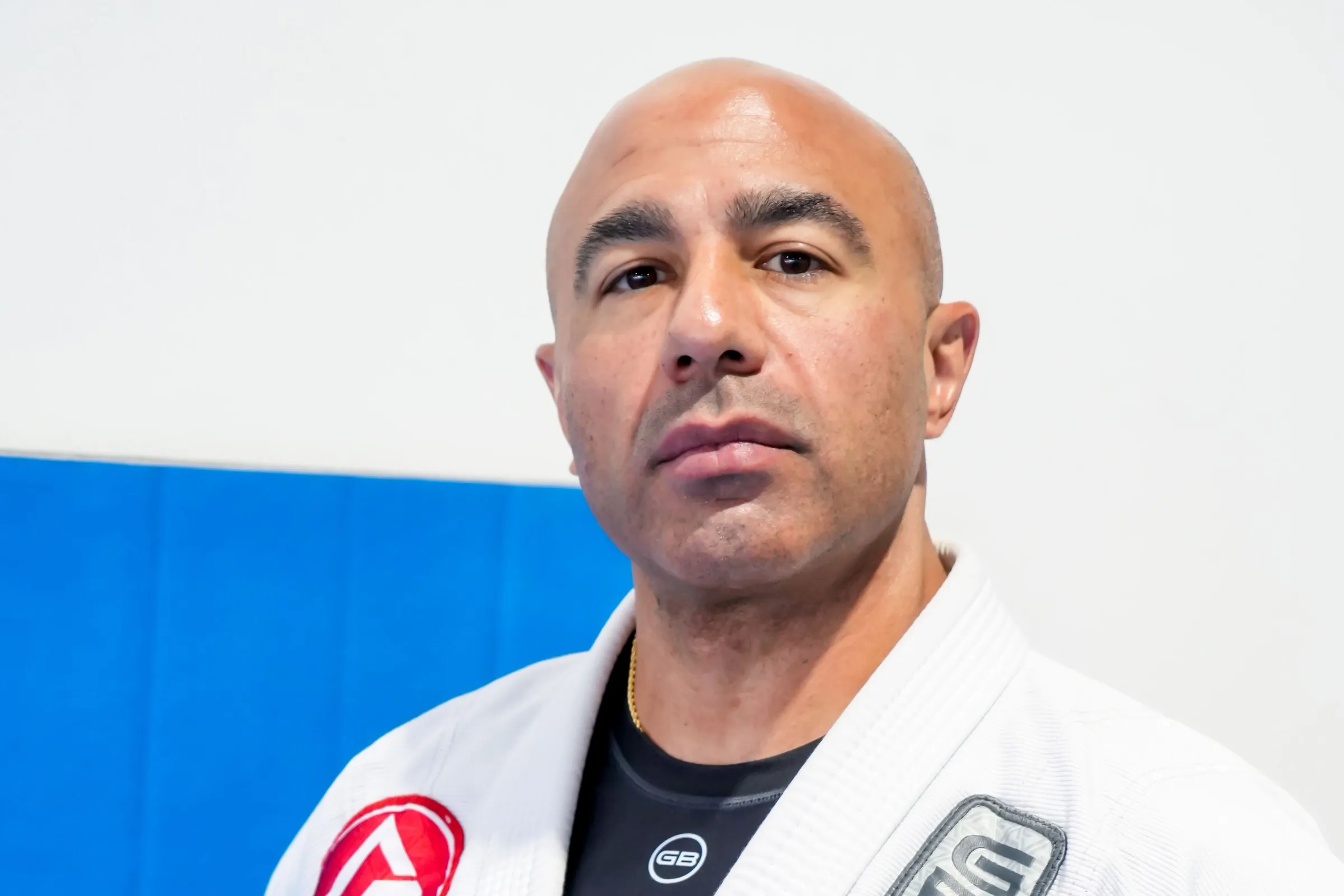
An executive who has trained in Brazilian jiu-jitsu, wrestling, boxing, or another combat sport for years arrives at this program with a real advantage and a real blind spot, and the two are connected. The advantage is genuine: years of live training under resistance build qualities that cannot be faked or shortcut, structure, base, composure under physical pressure, the calibrated sense of what real resistance feels like versus a compliant drill partner. The blind spot is that those qualities were built inside a ruleset, and the confidence they produce does not announce where the ruleset’s protection ends.
This is not a criticism of the training. A serious grappling background is the strongest foundation an executive can bring into this work, stronger than no background at all by a wide margin. The issue is narrower and more specific: competence built for a mat, a cage, or a ring is competence optimized for a contest with known rules, a known opponent, a known start and end, and a referee whose job is to stop things before they become what a real confrontation actually is. None of those conditions exist outside the gym. An executive who has never had this distinction made explicit tends to assume that mat competence and street competence sit on the same continuum, separated only by intensity. They do not. They are related skills with a real seam between them, and the seam is exactly where this program operates.
What Transfers
Consider what transfers cleanly first, because most of it does. Structure, the ability to maintain a stable base under load and pressure, transfers almost entirely intact. So does the capacity to stay composed while something physically difficult is happening, which is arguably the single hardest thing to train and the thing combat sports do best. The instinct to control distance, to recognize when a position is collapsing, to use leverage instead of strength, all of this generalizes well beyond the mat because it is built on physics and physiology rather than on the specific rules of a sport. An executive with a strong grappling base is not starting from zero in any of these areas, and a program that pretended otherwise would be wasting the most valuable thing that executive brings into the room.
What Doesn’t Transfer
What does not transfer is everything the ruleset was quietly handling on the athlete’s behalf. A wrestling match has one opponent. A street-level confrontation may not. A jiu-jitsu match starts from a known position, frequently standing, sometimes from the knees, always against a single person who has also agreed to the terms. A real confrontation can start from a car door, a hotel hallway, a position of complete surprise, against someone who has made no agreement about fairness and may be holding something other than a body. The referee who would stop a match before serious injury occurs does not exist outside the gym. None of these absences are things a combat-sport background prepares an executive to notice, because noticing them was never the athlete’s job. It was the sport’s job, handled structurally, invisibly, for years.
The Accomplished Grappler’s Blind Spot
This produces a specific and somewhat counterintuitive failure mode: the more accomplished the grappler, the more dangerous the blind spot can be, because accomplishment produces justified confidence, and justified confidence in one domain is easily mistaken for justified confidence in an adjacent one that was never actually tested. An executive who has rolled with talented training partners for a decade has a real, earned sense of what skilled resistance feels like. That sense does not extend automatically to multiple-opponent awareness, weapon recognition, or the decision architecture of when to fight versus when the only correct move is to not be there when it starts. Those are not advanced versions of grappling. They are a different subject that happens to share some of the same physical vocabulary.
Where the Sequence Matters
This is where the system’s sequence matters specifically for this audience. The program does not start an experienced grappler over at the beginning, and it does not treat grappling competence as irrelevant. It starts by making the boundary explicit: here is what your training has already given you, and here is the specific list of conditions your training was never designed to address. Awareness and avoidance, the dimensions that come first in the sequence, are frequently the most underdeveloped areas for an accomplished combat-sport athlete, precisely because so much of their training time has gone toward the dimension that comes fourth. An executive who can handle a live resisting opponent on a mat but has never trained recognizing a developing threat before contact, or practiced a clean exit before a situation escalates, has a serious capability with a serious gap directly in front of it.
The Context Layer
The context dimension matters here as well, more than it might first appear. A confrontation that includes a weapon changes the calculus of grappling response entirely, and an executive with a strong unarmed background who has not specifically trained weapon awareness and disarms is operating with a false sense of completeness. The same is true for multiple-opponent scenarios, where techniques built for one-on-one exchanges can become liabilities rather than assets if applied without modification. None of this diminishes the underlying skill. It locates precisely where that skill needs reinforcement to function in conditions it was never built for.
A Concrete Example
A concrete version of this gap is worth walking through, because it is more common than most accomplished grapplers expect. An executive with a decade of training is approached by a stranger in a parking structure at night, close enough that the encounter is already inside the range where grappling instincts activate. The training produces exactly what it should: calm, a stable base, a read on distance and contact. What the training did not produce is the thirty seconds before that moment, when the same executive walked past a person loitering near a stairwell exit without registering it as anything, because nothing in years of mat training ever asked them to notice a stairwell exit. The confrontation that follows may go fine, because the underlying physical skill is real. But it was a confrontation that a trained avoidance habit would have prevented from starting at all, and prevention is a cheaper, lower-risk outcome than even a well-executed physical response. This is the specific shape of the blind spot: not an inability to handle contact once it occurs, but an absence of the upstream skill that determines whether contact occurs in the first place.
When the Threat Carries a Weapon
The same gap shows up differently with weapons. An executive confident in unarmed exchanges, faced with a knife or a firearm at close range, frequently defaults to the only decision-making framework they have, the grappling framework, because it is the one that has been drilled until it is automatic. That framework was built and tested against an opponent without a weapon. Applying it unmodified against one is not a minor adjustment. It changes which responses are viable and which become significantly more dangerous than disengagement would have been. An executive who has never trained this distinction explicitly does not know, in the moment, that the rules have changed, because nothing in years of grappling ever told them the rules were conditional on the absence of a weapon.
The Honest Version
The honest version of this argument is not that combat-sport training is insufficient and this program replaces it. It is that combat-sport training is a genuine asset with a specific, identifiable boundary, and most executives who have that training have never had anyone draw the boundary for them. The value of going through this system with an existing base is not starting over. It is finally seeing the full shape of the capability they have already built, and the precise, addressable list of what stands between that capability and readiness for what it was never designed to handle.
The Discovery Call is a 30-minute conversation to assess your specific training background, identify exactly where it transfers and where it does not, and determine whether this program is right for you.
No commitment. Mutual evaluation.