Executive Self-Defense Is Different & Most Get It Wrong
Every high-performing executive I have worked with carries some version of the same quiet awareness. The gap between who they are professionally and how prepared they actually are for the physical moments that a title and a corner office cannot resolve.
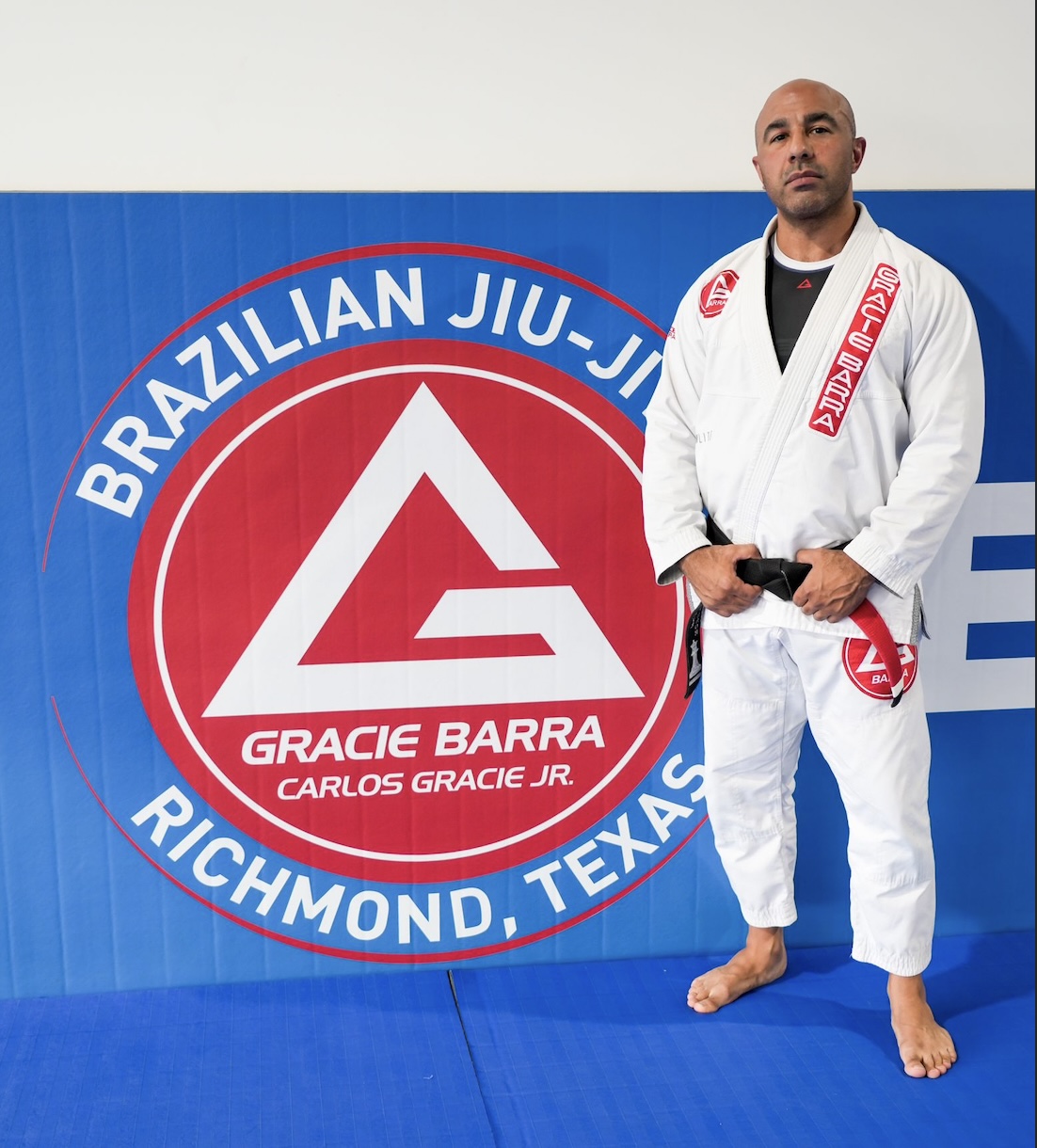
Every high-performing executive I have worked with carries some version of the same quiet awareness. They have closed every meaningful gap in their professional life with a disciplined rigor. They approach hard problems the way they approach everything else: directly, with sustained effort, until the gap is closed.
And then there is the reality of the world today. The reality of that internal voice reminding them.
The gap between who they are professionally, where they are capable, accountable, and responsible for others, and how prepared they actually are for the moments that a fancy title and a corner office cannot resolve. The physical moments. The unscripted moments. The moments where the situation is real and the variables are not controlled. The moments where the outcome depends entirely on their preparation and training, not their status.
Most executives I talk with have felt this. Few have done anything about it. And the ones who have tried, by attending a weekend seminar or a one-day course on situational awareness, often leave with something that resembles capability but isn’t. A confidence they haven’t earned. A feeling of progress that doesn’t hold when life gets serious.
That is not a character failure, but a structural one. The programs do not address their lifestyle and risk profile. And understanding why matters, because the alternative is not a different weekend seminar. It is a fundamentally different approach.
The Wrong Person Problem
The standard self-defense program is not built for the executive. The person who has an already full schedule, a high stress lifestyle, quarter-end obligations, and family responsibilities.
An executive travels. Leads under uncertainty. Carries responsibility that does not pause when a flight is delayed or a deal closes at midnight or a family emergency lands in the same week as a board presentation. The margin for capability that evaporates when life gets complicated is exactly zero, because life never stops getting complicated.
Standard programs ignore this. They are structured around the gym floor, not around life. Participants come in, learn techniques in controlled conditions against compliant partners, leaving with a catalog of moves they will practice when they have time. Time that never materializes with the consistency the program requires. The techniques atrophy. The gap reopens, only now it is slightly obscured by a certificate on the wall and a false sense of confidence.
This is not an argument against martial arts. Twenty years across multiple martial arts have shaped how I think, how I move, and how I operate under pressure in every domain. The argument is simpler: a program that cannot integrate into a genuine executive life fails to produce realistic capability.
Why the Standard Approach Fails
The failure has a root cause. It is not the techniques, it is the sequence.
The conventional self-defense program hands you a catalog of moves and trusts that, with enough repetition, the pattern beneath them will eventually emerge. For most practitioners, it does, but only after years of consistent training and live sparring. Life does not wait for your readiness and successful executives cannot allow themselves to be vulnerable while their skill increases.
What most executive programs do instead is accelerate the catalog and cut the repetitions. Ten techniques in a weekend instead of a hundred over two years. The result is a set of memorized responses that depend on unrealistic, predictable conditions: the right distance with the right grip done at the right speed with the right reaction from the person across from you.
Real situations are not predictable. They are faster, messier, and more disorienting than any seminar scenario. Against a larger opponent in an unfamiliar environment when you’re least expecting it. Under the kind of adrenaline that flushes fine motor control and makes rehearsed sequences feel like they belong to someone else’s body.
Techniques learned in isolation fail when conditions change. Principles do not.
A principle is not a technique. It is the logic beneath the technique. Positional hierarchy, structure and base, control before force, the relationship between distance and danger are not fighting moves. They are physical truths that govern every confrontation, regardless of the opponent, the environment, or the variables you did not anticipate. When you understand the principle, a new technique is not a new memorization. It is an application of something you already know. You learn faster and you retain it under stress. You’re able to adapt quickly when the situation does not match the scenario you practiced.
That adaptability is exactly what techniques alone cannot provide. And exactly what real situations require.
What Makes the Executive Context Genuinely Different
There is a category error embedded in most executive self-defense programs: they take a generic curriculum, label it “executive,” and adjust the dress code. The curriculum itself, the threat models, the scenarios, the physical emphasis, remains generic.
An executive’s threat profile is not generic.
High-visibility professionals who travel regularly, move through unfamiliar cities, and operate in public contexts carry a specific and elevated exposure that a generic program does not address. The situations that arise for a senior leader, in an international hotel lobby, in a parking structure after an evening event, in a city where they have no local orientation are meaningfully different from the situations those programs were designed for.
Beyond the physical environment, there is the weight of responsibility. The people this work is built for do not carry risk only for themselves. They carry it for families, teams, and organizations. The standard is not “can I protect myself.” It is “can I protect the people who depend on me, under conditions I did not choose, in a moment I cannot prepare for in real time.”
And there is the dimension that almost no self-defense program addresses directly: what happens afterward. An executive who uses force, even justified and proportionate, is forced to navigate the legal, reputational, and organizational consequences simultaneously. The decision framework that governs when and how force is appropriate is not a footnote to preparation. It is a core dimension of it. Capability without judgment is incomplete. In an executive context, it is potentially ruinous.
The Five Dimensions, and Why Sequence Is Everything
The fundamental error most programs make is not in what they teach, but where they start. They begin at physical technique. That is the fourth dimension of a five-part framework. Starting there, without the foundation that precedes it, produces exactly the kind of fragile capability that collapses under real conditions.
The right sequence moves differently.
Awareness comes first. Most adverse situations have early indicators that a trained observer reads and responds to before they develop. Most people miss them, not because the signals are absent, but because they have never been taught to look or because distraction has become so ambient that attention has narrowed to whatever is directly in front of them. Awareness installs specific perceptual habits: how to read a space, how to identify behavioral pre-indicators, and how to maintain situational clarity in environments designed to overwhelm attention.
Equally important, and less frequently developed, is discernment. Awareness that produces anxiety about every obscure situation is not capability. It is noise. The ability to separate signal from noise, to identify genuine threat indicators without generating reflexive alarm at neutral ones, is developed and trained alongside the perceptual habits themselves.
Avoidance comes second. The best outcome is the one that never happens or never escalates. Verbal de-escalation, environment management, and decisive movement before a confrontation crystallizes are taught to be instinctual, not abstract principles discussed once and forgotten. An executive who can use verbal responses and exit sequences subconsciously does not have to improvise under pressure. The pattern runs. That is the difference between an internalized principle and a merely understood concept.
Physical readiness is the third dimension, and it is not what most people expect. The standard is not special-ops level elite performance. It is not some twelve-week transformation plan or bootcamp. It is a realistic baseline of strength and fitness that can be maintained through a quarter-end push, international travel, and the ordinary disruptions of a life that does not stop when it gets uncomfortable. The protocol is built around the executive’s actual schedule, not an aspirational one. Because a protocol that collapses under the first real constraint life throws at it provides exactly nothing.
Capability is the fourth dimension, and this is where technique lives. The reason it comes fourth is not that it matters less. It is that technique without the preceding three is fragile. The techniques selected here are grounded in grappling and distance control because these approaches have the strongest demonstrated record of working against larger, stronger opponents under real resistance. Not sport or demonstration technique. Technique built on governing principles and filtered for what holds when the opponent is not complying, the environment is not a mat, and the variables are not controlled.
Every technique is taught through its principle first. That is what makes it transfer beyond the specific scenario it was drilled in.
Context is the fifth dimension, and it is what makes the other four relevant to your life rather than to someone else’s. Every engagement includes a structured assessment of actual exposure: the environments a client moves through, travel patterns, public visibility, the specific protective responsibilities they carry. That assessment shapes everything else, the scenario work, the emphasis within each dimension, the realities that continue between sessions.
Context also carries the legal and decision-making dimension. When to use force that is appropriate and what type is necessary. What the reality looks like in the specific environments a client operates in. This is not abstract legal theory. It is the personal judgment architecture that has to be pre-built, because at the moment, there is no time to construct it.
The Ground Is Where It Goes, and Where Executives Are Most Unprepared
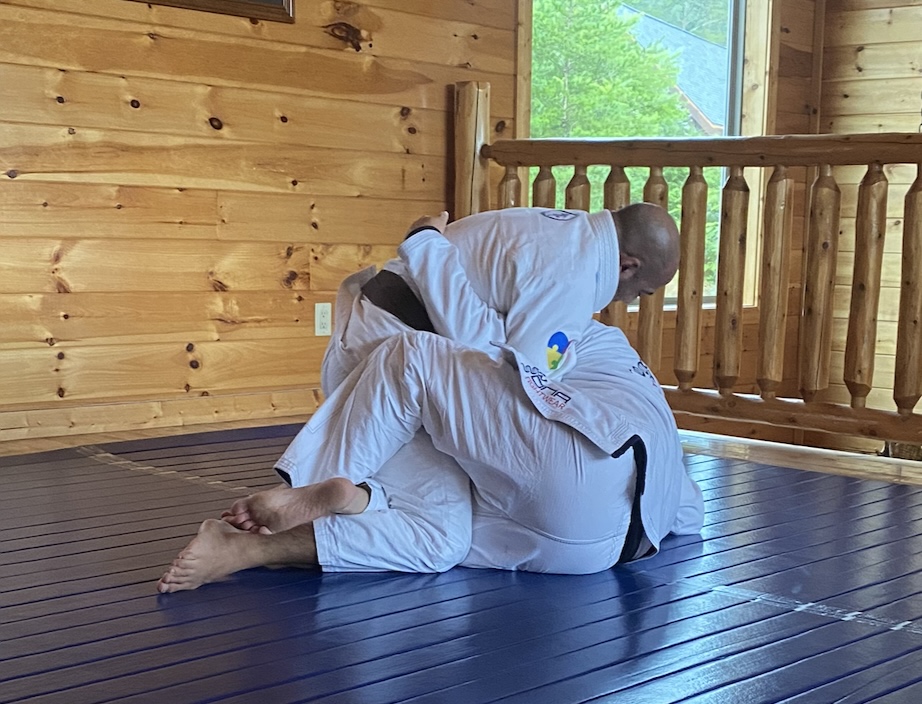
One of the most consistent gaps in executive self-defense programs is their treatment of the ground. Most programs spend significant time on standing techniques, strikes, escapes, wrist releases, and treat grappling and groundwork as a niche concern.
The research on real physical confrontations suggests the inverse. Most encounters go to the clinch or the ground within seconds of physical contact. This is not a training artifact. It is how bodies move under resistance when neither party is complying with the other’s preferred scenario in uncontrolled environments.
An executive who has never experienced being controlled on the ground, who has never felt a dominant position, has never been in a choke, and has never navigated the specific disorientation a physical confrontation comes with, carries a vulnerability that no amount of standing technique addresses. The psychological shock of the ground is its own problem, separate from any technical deficit. It produces panic and panic produces surrender.
The remedy is not becoming a grappler. It is developing enough competence and enough exposure to positional reality that the panic response does not govern the outcome. Regular training against live, resisting partners accomplishes something no seminar can simulate: the gradual, uncomfortable, essential process of becoming comfortable with discomfort. That comfort, under real pressure, is the deliverable.
Two Careers. One Framework.
The dual background matters, not as a credential, but as a structural reality.
An instructor who has spent their career entirely on the mat is translating into a language they do not speak when they work with executives. They understand the physical principles with deep fluency. They do not understand an executive schedule, executive travel, executive accountability, or the specific texture of operating daily in a high-stakes professional environment. They have to imagine it or assume that their client will bridge the gap themselves.
I do not translate because I operate on both sides of the line simultaneously. I run an executive schedule. I lead under uncertainty. I carry the kind of responsibility that does not resolve cleanly at the end of the day. The gap between the mat and the boardroom, between technical capability and real-world application in a high-stakes professional life is not abstract to me. It is my daily reality from which this work was built.
That is not a minor difference in background. It is what makes every dimension of the framework credible rather than aspirational. The schedule adjustments are realistic because I have navigated the same schedule. The travel protocols are calibrated because I travel under the same constraints. The context assessment is specific because I understand the specific context.
Who This Is For, and Who It Is Not
This work suits a narrow audience, which is intentional.
The right client is an executive or professional who has recognized, honestly, without softening, that personal capability is a domain they have not addressed with the focus they bring to every other high-stakes area of their life. They are people who excel at whatever they commit to. They have simply not yet committed to this and that voice in their head knows they need to.
The investment is significant, in time and in focus. The expectation is that they are honest with themselves and with me, that they engage with the framework rather than collecting techniques, and that they approach this the same way they approach any serious professional development: with focus, consistency, and sustained effort.
If you are looking for a weekend seminar, there are better resources. If you are seeking tournament preparation or fitness motivation, I can recommend experts. The audience for this work is specific. The benefit, for the right person, is substantial.
The Standard No Program Should Lower
Real capability is not a feeling, a certificate, or a false sense of confidence.
It is the ability to protect the people who depend on you, in the moments that do not announce themselves, under conditions you did not design, against variables you cannot control. That capability is built through principled, pressure-tested sustained effort.
The executives who I work with are not trying to become professional fighters. They are trying to close the gap they already know is there, and to close it with the same precision they bring to everything else in their lives.
Control is not a technique. It is the principle that holds when conditions change. And the conditions always change.