What International Travel Does to Your Situational Awareness
International travel eliminates the baseline that makes situational awareness work. Rebuilding it requires a deliberate sequence, starting before departure.

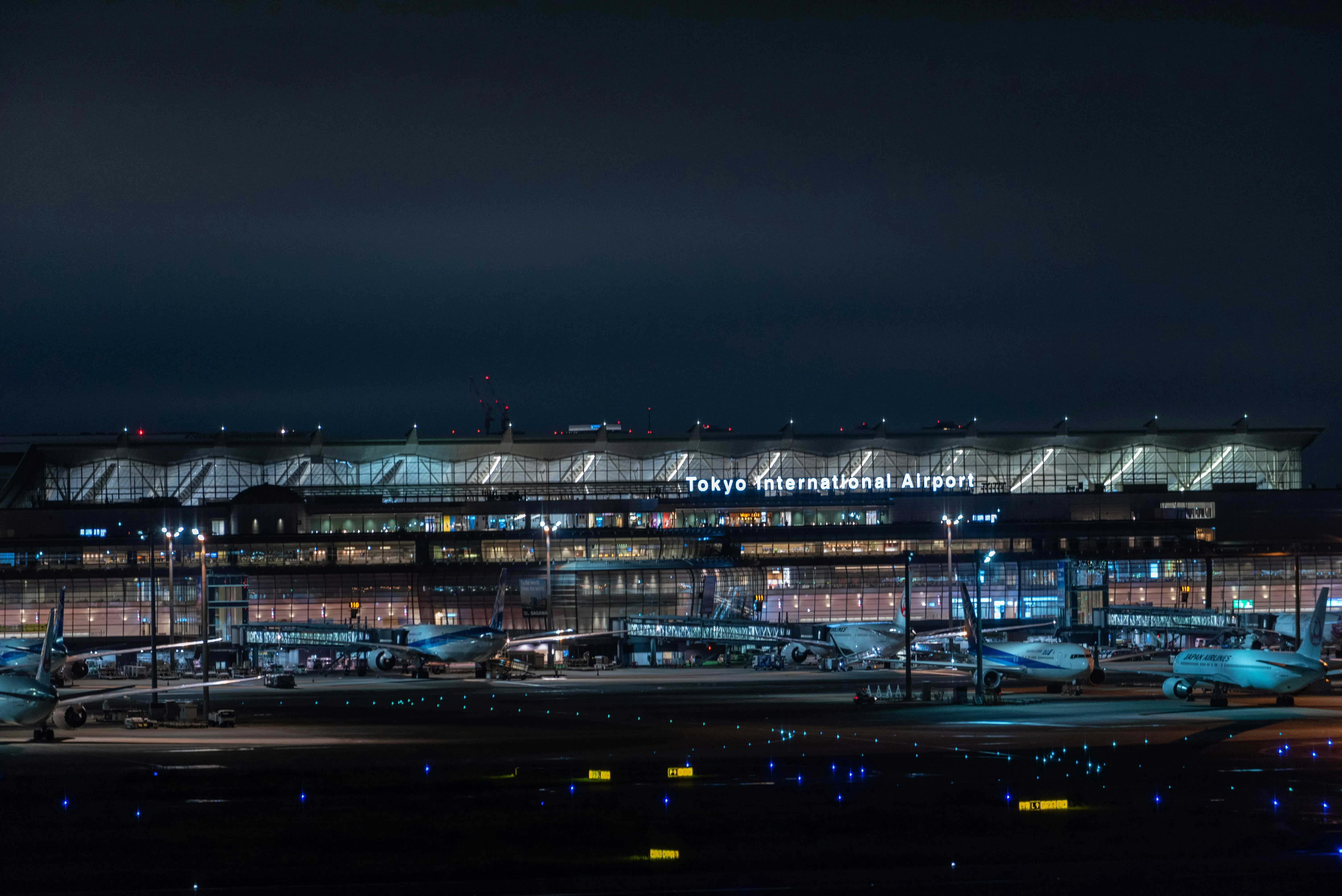
The flight from Houston lands at 6 a.m. local time. The executive has been airborne for nine hours, slept two, and is now walking through an airport where every sign, every announcement, and every interaction is happening in a language they do not speak. The ground transport they pre-arranged is not at the agreed pickup point. A driver they have never met is holding a sign with their name misspelled. The hotel is forty minutes away.
This is not a dangerous situation. It is a normal one. But something is missing that was present everywhere they traveled last month in the United States: a working read of the environment.
Situational awareness for executives traveling internationally fails not because international cities are uniformly more dangerous, but because the cognitive infrastructure that makes awareness possible has been removed. The trained awareness that protects an executive at home runs on a baseline: a developed sense of what normal looks like in the environments they operate in regularly. International travel does not modify that baseline. It eliminates it. The skill that compensates is deliberate baseline reconstruction, beginning before the trip and executed in sequence through the first hours on the ground.
What a Baseline Actually Is
Situational awareness is not vigilance. Vigilance is a heightened, sustained state of alert that cannot be maintained for more than a few minutes before cognitive load degrades it. Awareness, as a trained skill, operates differently by running on a developed sense of what is normal in a given environment. Variations from that normal are what surface as anomalies.
An executive who has worked in downtown Houston for fifteen years has a baseline for that environment. They know what foot traffic looks like at 8 a.m. on a Tuesday in the building lobby. They know which exits exist in the parking structure. They process these details without conscious effort because years of presence have installed the pattern. That pattern is what allows the anomaly to surface. When something is wrong, it feels wrong before the executive can articulate why. The trained read of the environment is the instrument.
International travel removes the instrument. Not partially. Entirely. A new city in a foreign country provides no prior experience to draw from. The behavioral norms, the crowd patterns, the language, the cultural register and the threat topology are all unknown. The executive is not less aware than usual. They are operating without the substrate that makes awareness meaningful.
This is a different problem than arriving in an unfamiliar domestic city. An American executive arriving in Chicago for the first time can still read basic environmental cues: English signage, recognizable retail behavior, social norms that approximate home. The baseline is degraded but not zero. International travel can push it to zero. The executive who understands this distinction will prepare differently than the one who treats all unfamiliar travel as roughly equivalent.
The Five Dimension System identifies Awareness as the first dimension precisely because everything else depends on it. Awareness and Avoidance make up the Foundation Layer of the Five Dimension System. Without a proper foundation, you are relying on hope, which is not a strategy. A trained awareness habit developed in familiar environments is described more fully in Mastering Awareness. This article addresses the specific problem international travel creates for executives who have developed that habit at home: arriving somewhere where it no longer works.
Visibility Increases at the Same Moment the Baseline Disappears
Two things happen simultaneously when a high-net-worth executive boards a long-haul flight. Their awareness baseline begins to disappear. Their visibility as a target simultaneously increases.
Domestically, an executive may move with reasonable anonymity. They know the city. They know where not to park. They can vary their routes because they know the terrain. Internationally, all of this reverses. Foreigners from high-income countries are identifiable in most international cities without effort. The carry is visible: devices worth thousands, a US passport, a business class hotel name on the luggage tag, a schedule determined by conference logistics rather than threat assessment. The predictability is built in: flights from major airports to major hotels along obvious routes, arriving at times anyone monitoring business class manifests could anticipate.
The visibility inversion is not a reason to avoid international travel. It is the reason the awareness gap created by travel requires a deliberate compensating response, not a general directive to “stay alert.”
Context, the fifth dimension of the Five Dimension System, is what shapes what preparation is appropriate for a specific individual. An executive whose travel profile produces high international visibility carries a different risk profile than one who travels rarely or in less prominent roles. The preparation that follows should match that profile, not a generic security checklist assembled for all travelers.
Pre-Trip Intelligence as a Baseline Substitute
The baseline an executive has at home was built over years of presence in a specific environment. There is no shortcut to replicating that depth in a foreign city. But there is a practice that installs enough structure to make anomalies possible: pre-trip intelligence work completed before boarding the flight.
This is not logistics research. Knowing the airport, the hotel address, and the distance between them is operations, not intelligence. Pre-trip intelligence means arriving at the destination with a working mental model of what normal looks like in that city, in that neighborhood, at that time of year.
What that requires:
Neighborhood character. Where the hotel sits in the city, what the surrounding area is used for, who occupies it at different times of day. The executive who knows they are staying adjacent to a commercial district with different nighttime character than daytime is not surprised by what they encounter at 11 p.m.
Local threat topology. Not the State Department advisory, which is written for liability purposes across the full travel population. The specific landscape: what the actual risk profile is for a foreign executive in that location. Petty crime patterns. Opportunistic targeting of foreign travelers. Whether organized criminal activity intersects with the business travel corridor.
Behavioral norms. What normal crowd behavior looks like in that culture. Baseline awareness collapses not only because environmental cues are unknown but because norms differ. A group of men who would read as potentially threatening in one cultural context are simply having a loud conversation in another. The executive who does not know the difference will either miss real signals or generate false positives constantly. Neither outcome is useful.
Time-of-day patterns. What the neighborhood looks like at the specific times the executive will move through it. Most travel security advice is static. Risk is dynamic: the route from hotel to conference center at 7 a.m. is a different environment than the same route at midnight.
This research installs a partial baseline before the first foot on the ground. It does not replace presence in the environment. But it means the first hour in the city is not completely opaque: the executive arrives with enough structure to recognize meaningful variations from what they expected to find. Personal safety for the executive who travels covers the broader preparation framework. Pre-trip intelligence is the awareness-specific component of that preparation.
The First Sixty Minutes on the Ground
The highest-risk window in international business travel is the first hour after arriving at the destination city.
At that moment, every disadvantage is simultaneously present. The executive is cognitively depleted from travel. The baseline is zero. Visibility as a foreign traveler is at its highest. The route from airport to hotel is the most predictable move in the entire trip. The pre-arranged ground transport creates a known, accessible schedule. Opportunistic targeting of a high-value foreign traveler does not require sophisticated intelligence. It requires knowing what business class arrivals from international flights look like at the pickup area of a major international airport.
The arrival protocol is the executive’s specific response to this window.
At the airport. Before picking up the phone: one to two minutes of environmental read. Not an assessment of threats. An installation of the baseline. What does the crowd look like. What is normal movement. Where do exits and service corridors sit. What does a driver waiting for a legitimate passenger look like versus a driver scanning for a target. This is the trained awareness skill applied before the phone re-engages and divides attention.
Ground transport. Confirm the driver before entering the vehicle. Not just the name on the sign: the booking reference, the company name, a description or photo if the service provided one. The driver who walks toward the passenger first, unprompted, while displaying no booking confirmation, is a signal worth pausing on.
Hotel arrival. Two requests that cost nothing: a room not on the ground floor, and a room that does not face the main entrance. Neither guarantees security. Both reduce predictability and casual observation of the executive’s floor and movement pattern. The front desk request takes thirty seconds.
The first hour in the room. Not a working hour. An orientation hour. The purpose is to allow the cognitive state to stabilize and begin installing a read of the immediate environment: the floor plan, the exits, the view from the window, the ambient pattern of the corridor. Executives who convert immediately to work on arrival are operating throughout the evening without the baseline rebuild that makes the rest of the trip safer. The hour is not lost. It is the investment that makes everything after it lower-risk.
This protocol is the application of the Avoidance principle: deliberate behaviors that reduce exposure before a situation develops, applied specifically to the international arrival context. It takes less time than waiting at baggage claim.
Situational Awareness Rebuilds in Sequence, Not All at Once
Situational awareness is not binary. It does not flip from “no baseline” to “full baseline” at some point during the trip. It rebuilds incrementally with exposure and deliberate attention.
By the end of day one, an executive who has applied the arrival protocol and maintained deliberate observation will have a partially functional read of their immediate environment. By day two, that read includes the hotel neighborhood, the route to the conference venue, the behavioral norms of the city. By day three, they are approaching something that functions as a working baseline for the specific environments they are moving through.
The recalibration arc means that the risk profile of international travel is highest at arrival and drops steadily with deliberate presence. Executives who manage international travel well are not necessarily those with the most experience in a specific country. They are those who run the deliberate reconstruction sequence well enough to compress the highest-risk window and accelerate the rebuild.
That sequence is a trainable skill: not instinct for a particular city, not accumulated knowledge of specific locations, but a practiced process for rebuilding orientation anywhere. The same sequence applied in Frankfurt as in Lagos as in Mexico City. What travels is the process, not the geography.
For executives whose work requires significant international travel, the gap between their domestic awareness capability and their international preparation is often the largest unaddressed exposure in their security profile. Assessing that gap, and building the discipline that closes it, is where the Discovery Call begins.