Houston Is Not a Safe City: What the Risk Environment Actually Looks Like for Executives
Houston's threat environment is specific, structural, and systematically underestimated by the executives who operate inside it every day.

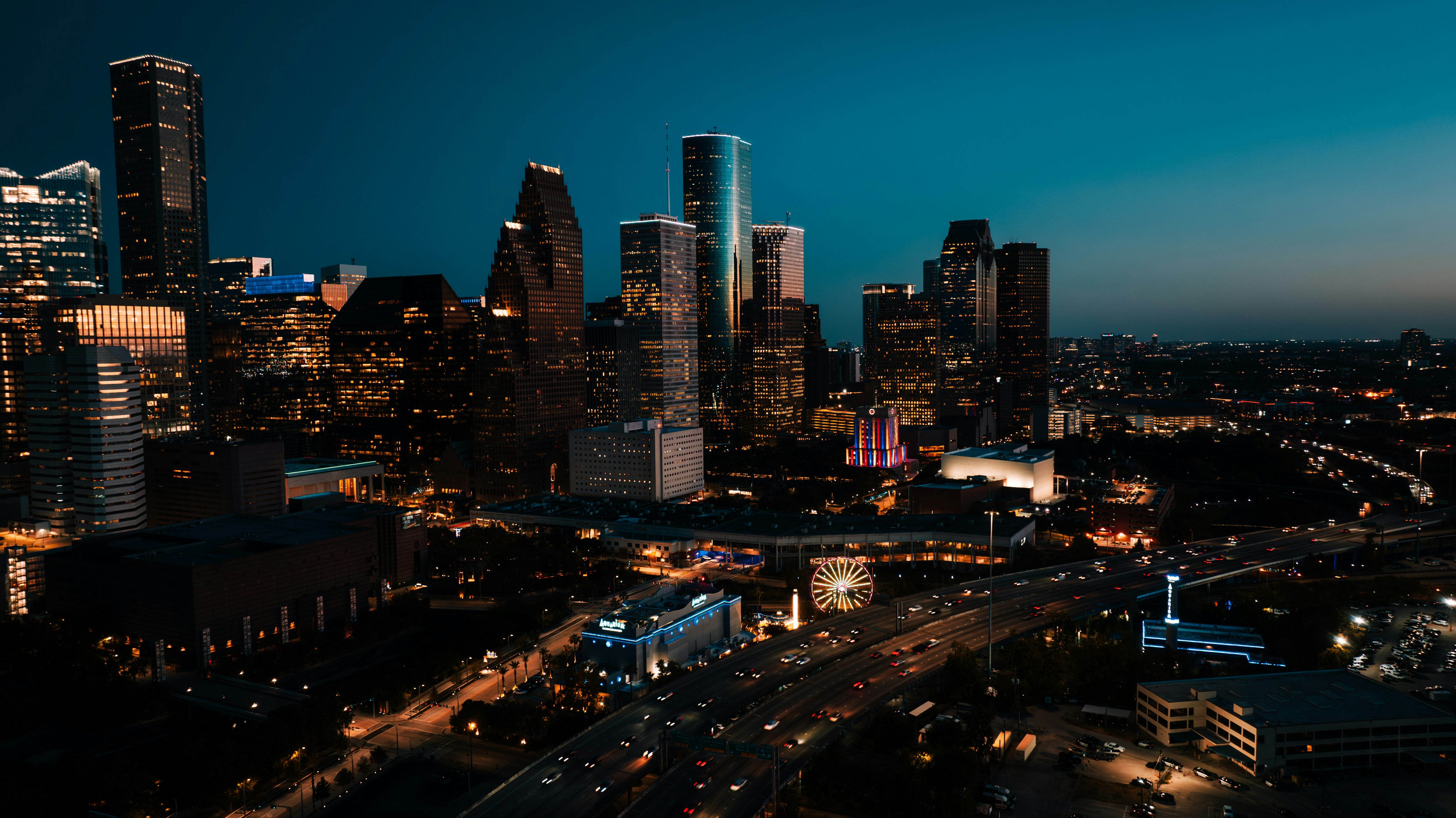
There is a version of Houston that executives inhabit professionally: the polished corridors of towers along Post Oak, the subdued hospitality of a private club dinner, the Energy Corridor’s landscaped campuses stretching west along I-10. That version is real. It is also incomplete.
Houston consistently ranks among the highest-crime major cities in the United States. Its violent crime rate is more than twice the national average. According to FBI uniform crime data, there were more than 26,000 violent crimes reported in Houston in 2024 alone. One in seventeen residents is statistically likely to become a victim of violent or property crime in any given year. Within Texas, more than 99 percent of cities have lower crime rates.
None of that means Houston is ungovernable or that executives should operate in a state of constant fear. What it means is that the city presents a specific, elevated risk environment that most of the people who operate inside it have never examined clearly. The reflex is to look at personal experience: years without incident, neighborhoods that feel controlled, professional environments that feel safe and conclude that the threat is theoretical. That reflex is wrong, and understanding why it is wrong is the beginning of operating more intelligently.
The Geography of Exposure
Houston is a car city. Its business districts are dispersed across hundreds of square miles, connected by freeways that require executives to move constantly: from home to office, from office to client, from client to airport, from airport to hotel, and back. That movement pattern is the first source of exposure most executives never think about.
The transition points: parking structures, valet queues, hotel arrivals, airport pickups, fuel stops are where the friction is. They are the moments when an executive exits a controlled environment and enters a public one, often briefly, often with reduced attention because the transaction is routine. Routine is the wrong frame. These transitions are predictable. When repeated on a regular schedule, in high-crime urban environments, predictable transitions become target-selection opportunities.
The areas of greatest concern are not the obvious ones. The neighborhoods an executive is most likely to visit: Galleria, Westchase, the Energy Corridor, River Oaks, Midtown, the Medical Center are not the highest-crime districts in Houston. But they sit in a city with elevated baseline risk, and they draw concentrated traffic from people who carry visible markers of wealth: late-model vehicles, business attire, luxury watches, corporate parking access. Jewelry robberies at commercial districts on the west side of Houston are documented, recurring, and often opportunistic, meaning the victim was not specifically targeted in advance but was read as a viable target in the moment.
This distinction matters. Most executive security thinking is organized around the targeted threat: the stalker, the disgruntled employee, the ideological bad actor. Those threats exist and deserve attention. But in Houston’s daily crime environment, the more common risk is opportunistic: a robbery crew working a commercial corridor, a carjacking that begins with a routine stop, a theft that escalates because the victim responded in a way that invited escalation. These are not exotic scenarios. They are ordinary crime patterns in high-crime cities, and the executives most likely to encounter them are the ones who move frequently across the city’s commercial zones without having thought through what they would do.
The Energy Sector Dimension
Houston is the global capital of the oil and gas industry. That fact is professional context for most of the professionals who work there. It is also threat context that most of them have never examined.
The energy sector creates specific physical risk vectors that are largely invisible to the executives inside them. The first is international travel. Senior executives in oil and gas travel frequently to operating regions around the world, many of which carry materially higher risk profiles than Houston itself. The threat patterns in those environments include extortion, kidnapping for ransom, targeted robbery of known-value individuals. These are different in character from domestic urban crime. The executive who has spent twenty years operating in Houston without incident may be traveling quarterly to environments where the threat model is fundamentally different and where the assumptions that serve them at home are liabilities abroad.
The second is the cross-border dimension. The energy sector’s commercial relationships with Mexico are deep and structural. Executives who travel to Mexico on business, whether to meet counterparts, visit facilities, or close deals, are operating in a country where kidnapping rates, territorial control over specific regions, and the targeting of businesspeople with visible wealth or known company affiliations present real, documented risk. The threat is not evenly distributed across Mexico and it is not inevitable. But it requires deliberate preparation that most executives approach, if they recognize it at all, as a logistics problem rather than a physical security problem.
The third vector is less obvious: the concentration of wealth and professional identity that the energy sector creates in Houston itself. Executives at major energy companies are publicly identifiable. Their roles are published. Their movements around industry events, conferences, charity galas, or corporate hospitality events are predictable and often advertised in advance. That visibility is not inherently dangerous, but it reduces the effort required by anyone paying attention to locate a specific individual at a specific time and place.
Public Events and the Concentration Problem
Houston hosts events at a scale that most cities do not. The Houston Livestock Show and Rodeo draws more than 2.7 million attendees across three weeks annually. NRG Park and the surrounding district operate as a sustained high-density environment for the entire run, with corporate hospitality, executive-level entertainment, and public carnival grounds all operating simultaneously. The Texans season, concerts, NCAA events, and premium sporting events fill the calendar all year long.
Large public events create a specific threat pattern that is worth understanding clearly. The concentration of people in a defined geography over a predictable time window draws two things simultaneously: security resources and criminal activity. The security resources are real and substantial at major Houston venues. The law enforcement presence at the Rodeo is described by officials as comparable to Super Bowl protocols. The criminal activity is equally real. Robbery crews survey event parking areas specifically because the conditions are favorable: high foot traffic, distracted crowds, vehicles left unattended for hours, and targets who have been publicly consuming alcohol and carrying valuables.
The transition from the controlled interior of a major event to the parking structure or lot outside it is one of the more dangerous routine movements an executive makes. It is the moment when the security perimeter ends, the crowd has dispersed into disorganized movement, and attention has shifted to the logistics of locating the vehicle, managing the group, managing devices. That window is brief. It is also the window most consistently exploited by street-level robbery operations in high-traffic event districts.
The risk at public events is not primarily inside the venue. It is in the predictable, recurring transitions that most attendees treat as afterthoughts.
The Transnational Criminal Presence
Houston’s geographic position creates a threat dimension that is distinct from most major American cities. It sits at the operational end of a cross-border criminal geography that includes some of the most sophisticated transnational organized crime in the world. Federal law enforcement has been explicit about this: the FBI’s Houston field office co-founded a dedicated Homeland Security Task Force specifically to address the presence of foreign gangs and transnational criminal organizations operating in Southeast Texas. That task force is not theoretical. It is a response to documented operational activity.
The significance for executives is not that they are likely to be targeted by cartel organizations in Houston. The significance is that the criminal ecosystem in which they operate is more complex and more resource-rich than the one most of them assume. Sophisticated criminal organizations create a general environment of elevated capability with recruitment, logistics, and operational capacity that elevates the baseline sophistication of criminal activity in the regions where they operate. Houston’s crime environment is not disconnected from that broader picture.
More directly: executives in industries with cross-border commercial activity, particularly energy, are operating in an environment where their professional identity, travel patterns, and known wealth may create relevance to actors operating with more strategic intent than a street robbery crew. This does not require paranoia. It requires situational honesty with a clear-eyed acknowledgment that the risk environment these professionals operate in is not the same as the one their general domestic awareness is calibrated for.
What Executives Actually Underestimate
The most consistent gap is not knowledge. Most executives who spend any time thinking about this understand that Houston has elevated crime rates, that certain environments carry more risk than others, and that international travel introduces complications. The gap is operational: the distance between knowing something abstractly and having prepared for it concretely.
The executive who knows Houston has high crime rates but has no practiced response to a confrontation in a parking structure has not prepared. The executive who knows foreign travel carries elevated risk but has no protocol for arrival-window management, no understanding of which behaviors increase exposure and which reduce it, has not prepared. The executive who attends major public events regularly but has never thought through what they would do if the situation in the parking lot deteriorated has not prepared.
Preparation is not equipment. It is not a firearm carried legally and without any accompanying awareness discipline. It is not an alarm system at the residence while the commute remains entirely unreflective. Preparation is the product of deliberate, structured training that starts with an honest assessment of the specific environments an individual operates in and builds the physical and cognitive capability matched to those environments.
Houston is a city where the gap between that kind of preparation and the assumptions most executives are actually operating on is wider than most of them know.
The Calculation Most Executives Avoid
There is a reason most executives in Houston have not done this work. It is not that they lack resources or access. It is that confronting the actual risk environment requires revising a self-image that professional success tends to reinforce.
The executive who has built a significant career, who operates in controlled environments, who moves through the world with evident authority, has accumulated a great deal of evidence that they are capable and that bad things happen to other people. That evidence is real and it is also irrelevant to physical risk. Professional authority does not transfer to a coordinated confrontation. The instincts that serve in a negotiation or a board presentation do not naturally translate to a street-level threat. And the composure that comes from genuine physical preparation, from having trained under pressure rather than having theorized about it, is qualitatively different from the confidence that comes from never having been tested.
Houston’s threat environment is not designed to make that case for people. It will simply continue to present the conditions it presents: elevated, specific, and more complex than most of the executives operating inside it have chosen to acknowledge.
The ones who examine it clearly, and who build their preparation accordingly, are operating in a fundamentally different relationship to their environment than the ones who have not.
Houston’s risk environment does not wait for executives to be ready for it. The Discovery Call is a 30-minute conversation to assess your specific context, identify where your preparation is adequate and where it is not, and determine whether this program is right for you.
No commitment. Mutual evaluation.