The Advantage That Doesn't Know Which Room It's In
The conditioning that holds up in a physical confrontation is the same capability that reads as command presence before a word is spoken in a boardroom.

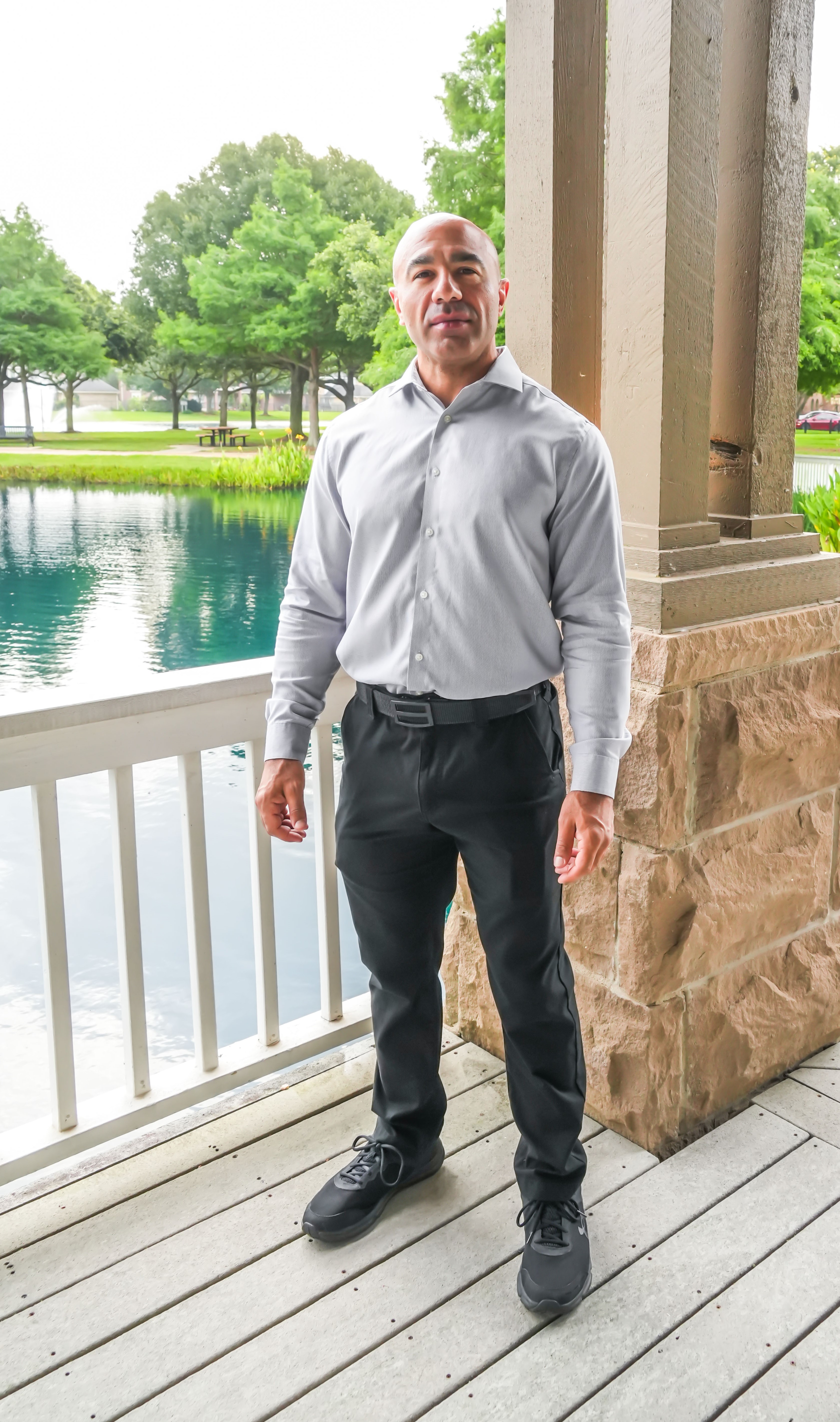
Physical Readiness Loses the Budget Argument Before It Gets a Hearing
Houston’s energy sector and Austin’s technology corridor run on the same scarce resource: time. The executives operating inside either one do not lack ambition, intelligence, or work ethic. What they lack is a spare hour, and every decision about where that hour goes gets evaluated the way every other resource allocation in their life gets evaluated, by return.
This is where physical readiness usually loses the argument before it gets a fair hearing. It gets filed as a wellness expense: worthwhile in theory, optional in practice, the first line item cut when a calendar gets tight. The executive who would never treat his professional development this way, who invests deliberately in the skills that compound his career, routinely treats the physical system running that career as a discretionary afterthought.
Physical readiness is not a wellness expense. It is a single trained capability that pays out in two places most executives have never considered related: the boardroom and the physical confrontation. Both test the same thing, whether a nervous system under real pressure can stay regulated and think clearly. An executive who trains it in one arena carries the advantage into the other, whether or not he ever consciously connects the two.
Two Rooms, One Underlying Test
The boardroom and the physical confrontation do not resemble each other on the surface. One is controlled, verbal, and governed by professional norms. The other is chaotic, physical, and governed by nothing at all. But both rooms run the identical underlying test: can this person hold composure and think clearly while a nervous system that wants to panic is telling it otherwise.
A hostile negotiation, a board challenge to a decision already made, a room that has turned adversarial mid-meeting: these produce a real physiological response, not just a metaphorical one. Heart rate climbs. Attention narrows. The body prepares for a threat it cannot physically fight or flee, because the threat is a person across a table, not a person in a parking structure. The executive whose only training for this state is professional experience is running on willpower alone. The executive who has built physical readiness has trained the actual nervous system response the boardroom is triggering, under conditions considerably more demanding than a hostile question ever will be.
What the Room Reads Before Anyone Speaks
Executive presence is treated as a personality trait, something a person either has or does not. It is more accurately a physical signal, read unconsciously and almost instantly. Posture, breathing, the steadiness of eye contact, the absence of fidgeting under pressure: these are not stylistic choices an executive makes in the moment. They are the visible output of a nervous system that either has or has not been trained to stay regulated under load.
This is not a claim that fitness makes someone likeable. It is a narrower, more mechanical claim: a body that has been conditioned to function under real physical stress does not present the same signals of depletion and anxiety that an untrained body presents under the same conditions. A room reads that difference before a single argument has been made, and it reads it correctly, because the signal is not a performance. It is what genuine physiological regulation actually looks like from the outside.
Two executives can walk into the same hostile board meeting with identical technical preparation and produce entirely different outcomes for reasons that have nothing to do with what either one says. One has spent the morning on four hours of sleep, running on caffeine, physically unprepared for a confrontation his calendar did not warn him about. His voice tightens under the third pointed question. His shoulders round forward. Nothing he says is inaccurate, but the room has already started discounting it, because his body is telling a different story than his argument. The other has built a nervous system that regulates under load as a matter of routine conditioning, not willpower summoned for the occasion. His posture does not change when the questions turn adversarial, because adversarial pressure is not a novel event for a body that has trained under harder versions of it. The room cannot articulate why it trusts the second answer more. It simply does.
One Trained Response Shows Up the Same Way in Both Rooms
Consider an executive who has built genuine physical readiness, tested it under real resistance, and carries that conditioning into both arenas this essay describes. In a late-stage negotiation that turns unexpectedly hostile, a counterparty raises his voice and abandons the professional tone the meeting opened with. The executive’s first response is physiological before it is strategic: a controlled breath, a deliberate slowing of his own speech rather than a match to the room’s rising volume, a posture that stays open rather than defensive. None of this is calculated in the moment. It is the same regulated response his physical training has built for a genuinely dangerous situation, running automatically because the nervous system does not distinguish between an aggressive counterparty and a physical threat as cleanly as the conscious mind does.
The same executive, walking to his car in a parking structure at night, registers a person loitering near the exit before consciously deciding to notice him. His pace does not change. His posture reads as alert rather than anxious. If the person approaches, the same trained composure that held the negotiation together produces a clear read of distance and intent rather than a panic response that clouds both. This is not two different skills coincidentally possessed by the same person. It is one trained capability, expressed twice, in the two environments that actually test whether an executive’s composure is real or assumed.
Not Being a Target, in Either Room
Avoidance, the second dimension of this system, rests on a principle that applies as directly to a boardroom as it does to a street: opportunistic threats select targets based on visible signals of depletion, distraction, and low alertness. The same signals that make someone a less attractive physical target, an upright posture, a steady gaze, the composed alertness of someone who is not exhausted, also make someone a less attractive target for a hostile line of questioning, an aggressive negotiating tactic, or a colleague looking to exploit a moment of visible weakness.
This is not a coincidence of two unrelated domains happening to share a description. It is the same underlying signal, alertness versus depletion, read by two different audiences with two different intentions, one physical and one professional. An executive who has done the work to project the first version is not performing confidence in either room. He is broadcasting an accurate physiological fact about the state of his nervous system, and both a would-be opportunist and a hostile negotiator are equipped to read it, whether either one could explain how.
The Same Nervous System, Two Different Stress Tests
The physiology underneath both rooms is identical. Cardiovascular conditioning and structured physical training improve the body’s ability to regulate cortisol and adrenaline, the same hormones a hostile negotiation and a physical confrontation both trigger. An executive who has trained this system under real physical stress, not a spreadsheet’s worth of theoretical stress, has practiced the actual skill a difficult board meeting requires: staying analytically clear while a nervous system is doing everything it can to hijack that clarity.
This produces a specific, practical advantage that has nothing to do with confidence as a personality trait. Decision quality under stress is measurably different for a nervous system that has practiced staying regulated under real physical load versus one that has never been tested outside a controlled professional environment. The executive who has only ever managed stress inside a boardroom does not know, until the moment it matters, whether his composure holds when the stakes and the physiology both escalate at once. The one who has trained it under harder conditions already knows the answer, because he has already tested it.
The mechanism is not mysterious. Structured physical training under real exertion repeatedly exposes the body to a raised heart rate, adrenaline, and cortisol, and repeatedly requires it to function and recover under those conditions rather than escape them. Over time, this builds a wider window of physiological tolerance before the stress response starts degrading fine motor control, verbal fluency, and analytical judgment, the same three faculties a hostile negotiation demands at the exact moment stress is highest. An executive who has never trained this window has a narrower one by default, not because of any personal failing, but because nothing in a normal professional life provides the same repeated exposure to genuine physical stress that a structured program does.
What the Untrained Nervous System Costs
This is not an abstract cost. An executive whose stress response has never been trained under real physical load reaches his ceiling faster in a genuinely hostile moment, and the first thing to degrade is usually not visible to him in the moment: verbal precision narrows, options that would normally be obvious stop presenting themselves, and the instinct to end the discomfort starts competing with the instinct to reach the right outcome. He may still close the deal, win the argument, or navigate the confrontation. He does so with less margin than he believes he has, and margin is exactly what a genuinely difficult negotiation, or a genuinely dangerous confrontation, tends to consume first.
Confidence That Was Earned, Not Assumed
There is a meaningful difference between the confidence a title carries and the confidence a tested capability confers, and a room can generally tell the two apart over time, even when it cannot articulate why. Positional confidence depends on the room continuing to grant deference aligned with societal niceties. Trained confidence does not, because it was built against genuine resistance rather than professional courtesy, and it does not evaporate the moment the room stops cooperating.
This is the same distinction that separates a program built on resistance-tested training from one built on theory. An executive whose composure has only ever been tested in environments where people are professionally obligated to be polite to him has not actually tested it. The physical confrontation, and the physical training that prepares for it, is one of the few environments left in an executive’s life where nothing is deferential and nothing is theoretical. What holds there is real. What only holds in a boardroom has not yet been tested.
Deferring Physical Readiness Puts an Under-Maintained System Under Every Decision
Optimizing wealth while treating health as optional is a losing trade, not because of some vague long-term wellness principle, but because of a specific, mechanical failure mode: the body running the judgment is the same body accumulating the debt. An executive who defers physical readiness indefinitely is not skipping a workout. He is running an increasingly under-maintained system underneath every high-stakes decision he makes, and the two rooms this essay has described, the boardroom and the confrontation, are simply the two places that debt eventually gets called.
The correction is not a dramatic lifestyle overhaul. It is the recognition that physical readiness was never a wellness line item competing with the calendar for attention. It is the substrate the rest of the calendar runs on, in both of the rooms that actually determine how an executive’s career and his safety hold up under real pressure.
Whether the Nervous System Holds Is Worth Answering Before It Matters
None of this requires becoming a professional athlete, and none of it is about how an executive looks. It is about whether the nervous system underneath his judgment and his physical safety has ever been tested against something real, or only ever asked to perform inside rooms built to be polite to him. Executives who want to close that gap, in the boardroom, in a genuine physical confrontation, or in the quiet accumulation between the two, can start with a Discovery Call.