The Conditioning Most Executives Skip
Physical Readiness is not athletic performance. It is what makes every other dimension usable under real stress, and most executives skip it entirely.

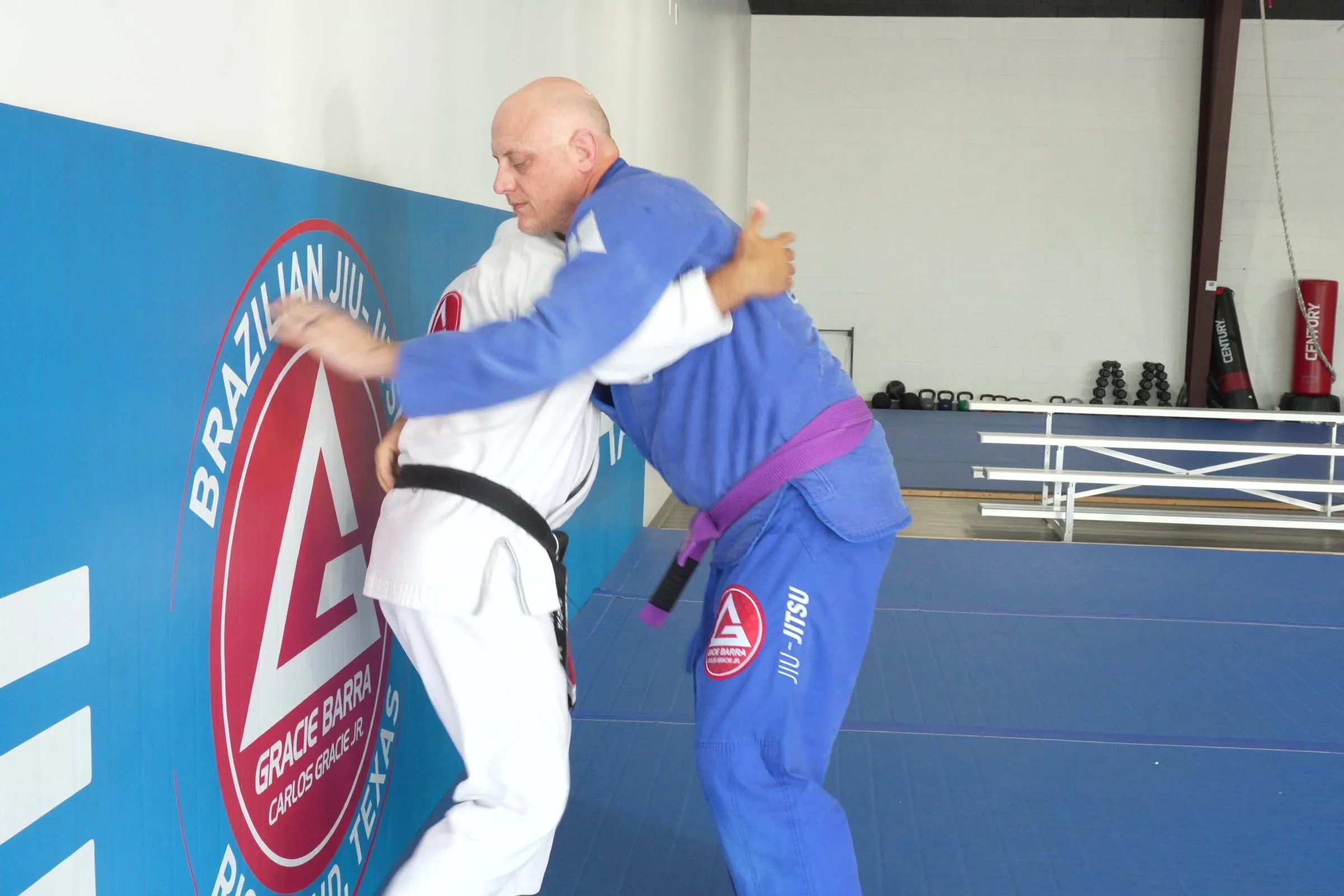
Every executive who reads this has, at some point, built a serious habit out of something hard: a training regimen for a marathon they wanted to finish, a discipline around sleep during a demanding quarter, a diet protocol a doctor recommended after a check-up came back with a number they didn’t like. The capacity for rigor is not the problem. The problem is where that rigor gets applied. Financial planning gets the rigor. Business continuity gets the rigor. The body, specifically its readiness to function under acute physical stress, usually does not.
This is the third dimension of the system, but it sits in a strange position. It is the dimension executives most often either ignore completely or approach in a way that doesn’t survive their actual life. Neither failure is about motivation. Both come from a wrong model of what Physical Readiness is for.
The Wrong Two Options
Most executives who think about physical training default to one of two paths, and both miss the target.
The first is no training at all beyond whatever general fitness routine already exists: a Peloton three mornings a week, a Sunday round of golf, a trainer focused on aesthetics and longevity. None of that is wasted or irrelevant to general health. But it was never built to answer the question this dimension exists to answer: what does the body do in the first ninety seconds of a genuine physical confrontation, when adrenaline floods the system, fine motor control degrades and breathing becomes the limiting factor before strength does. A general fitness routine has no answer to that question because it was never asked.
The second path is the overcorrection: a high-intensity program built for competitive athletes, marketed with the assumption of unlimited recovery time and a schedule with no other obligations in it. This path fails differently. It is not irrelevant to the goal but simply incompatible with the life of the person attempting it. An executive coming off three days of international travel and a board presentation does not need a training block designed for someone whose full-time job is training. The program is correct in theory and wrong for the person running it, which in practice makes it just as useless as no program at all. It gets abandoned within a season or when the first nagging injury occurs and the executive returns to the first path having proven to themselves that this kind of training “doesn’t work” for someone with their schedule.
Both paths share the same root error: they treat Physical Readiness as a fitness goal rather than as a specific capability with a defined purpose.
What Physical Readiness Actually Means
Physical Readiness, properly defined, is the strength and conditioning required to execute under stress: not peak athletic output, not aesthetics, not a number on a scale or a personal best on a lift. Those are all achievable and often byproducts of a properly defined and structured program. Physical Readiness is narrower than general fitness and more specific in its target.
Three pillars of Physical Readiness matter most.
The first is functional strength: the kind that holds structure under load. Strength that lets a person maintain base and position when someone else is actively trying to take it from them. This is not the same as raw strength measured in a gym. A strong person with no trained structure collapses under pressure the same way an untrained person does, just slightly later. This is seen by every physically imposing, jacked man who takes his first Jiu-Jitsu or Muay Thai class.
The second is mobility: the ability to change levels, change angles and move the body through ranges of motion that a sedentary professional life slowly closes off. A confrontation does not happen at a fixed height or a fixed distance and a body that has lost the ability to move through its full range of motion is already at a disadvantage before anything else happens.
The third is short-duration, high-output capacity: the cardiovascular and muscular ability to sustain genuine exertion for the period of time a real physical event actually lasts, which is shorter than most people imagine. Most confrontations that reach physical contact resolve in seconds, not minutes. Training for a marathon does nothing to prepare a person for fifteen seconds of maximum output. Training built around long, steady-state cardio is solving the wrong duration problem entirely.
None of this requires the executive to become a competitive athlete. It requires a specific, narrower kind of conditioning that most general fitness programs were never designed to produce.
The Composure Argument
There is a fourth pillar that matters more than the first three combined and it is the one most overlooked: stress inoculation.
A body that has never been put under controlled physical stress reacts to real stress with panic and hesitation. Heart rate spikes beyond what the situation requires. Breathing becomes shallow and fast. Fine motor skill, the kind required to execute any trained technique, the kind required even to think clearly degrades sharply. This is a physiological fact, not a question of courage or character. It happens to everyone whose nervous system has never been exposed to a controlled version of that same stress response.
Live training, sparring, drilling against resistance, exertion pushed close to a real limit under supervision exposes a person’s nervous system to that same chemical and physiological response, repeatedly, in a setting where nothing is actually at risk. Over time and practiced repetitions the response changes. Not because the person becomes calm by force of will, but because the body has been there before and recognizes the pattern. The same stress event produces a measurably smaller spike where breathing stays usable and the thought process stays available.
This is the direct bridge to Capability. A technique trained for years in a controlled setting is worthless in the moment it is needed if the nervous system carrying it has never once executed it under real exertion and real adrenaline. Physical Readiness is not a separate item on a checklist sitting next to Capability. It is the precondition that makes Capability usable when it matters. An executive who has built technique without building the stress tolerance to access it under pressure has built something that will not show up when called upon.
Built Around a Real Calendar
The reason most executives never close this gap is not that they don’t understand its importance. It is that the standard models for closing it assume a volume of unbroken time that a demanding professional life does not have to give.
The same constraint that governs how Capability gets built on an executive’s actual schedule governs Physical Readiness. The protocol has to be engineered around a quarter-end push, a stretch of international travel, three weeks where eight hours of sleep is aspirational rather than typical and a family schedule that never seems to have a free day. A plan that assumes none of that will happen is not a serious plan. It is a plan that has not yet been tested by the calendar it will actually run on. It is a plan that refuses to take into account the lifestyle and Context of the executive’s reality.
What that means in practice is a small, durable baseline rather than an ambitious one. A short list of movement patterns and conditioning work that can be done in a hotel room with no equipment, calibrated to slowly raise the floor rather than chase an impossible ceiling. The goal during a disrupted stretch is not progress. It is not losing what has already been built. Progress happens in the weeks where the calendar allows for it and the floor holds everything together in the weeks where it does not.
This is also why the work is private rather than programmed into a general class structure. A group program has a fixed intensity and a fixed expectation of attendance, neither of which bends around a calendar that changes week to week. A protocol calibrated to one person’s actual baseline and actual disruptions can flex with the executive instead of being abandoned by him the first time real life intervenes. A concierge approach can have the potential to provide more focused results while allowing for the executive to sustain their specific capabilities over time.
The Cost of Skipping It
An executive who has built Awareness and Avoidance, and who has trained technique under the Five Dimensions in the correct order, but has skipped Physical Readiness, has built something fragile in a way that is easy to miss until the moment it matters. The technique and judgement may exist. The body executing both is the one piece that has never been tested under the conditions it will actually face: tired, stressed, breathing hard, operating on a nervous system that has never once been asked to perform under genuine exertion.
This is not a case for becoming a competitive athlete. It is a case for treating Physical Readiness the way every other serious domain in an executive’s life is treated: with a clear definition of what it is actually for, a realistic assessment of what the calendar can sustain and a refusal to confuse general fitness with the narrower, specific readiness this work requires.
The rigor already exists. It has simply never been pointed here.
The First Step Is an Assessment, Not a Commitment
Every engagement Steve Frassetti takes on begins with a Discovery Call: thirty minutes, no obligation, an assessment of what the calendar can actually sustain and whether this kind of conditioning fits the life it has to survive. The current state gets established before anything is prescribed.