The Executive's Dilemma
Executives bring rigor to every professional domain. Physical preparedness is where that rigor most often goes missing: and where the cost is highest.

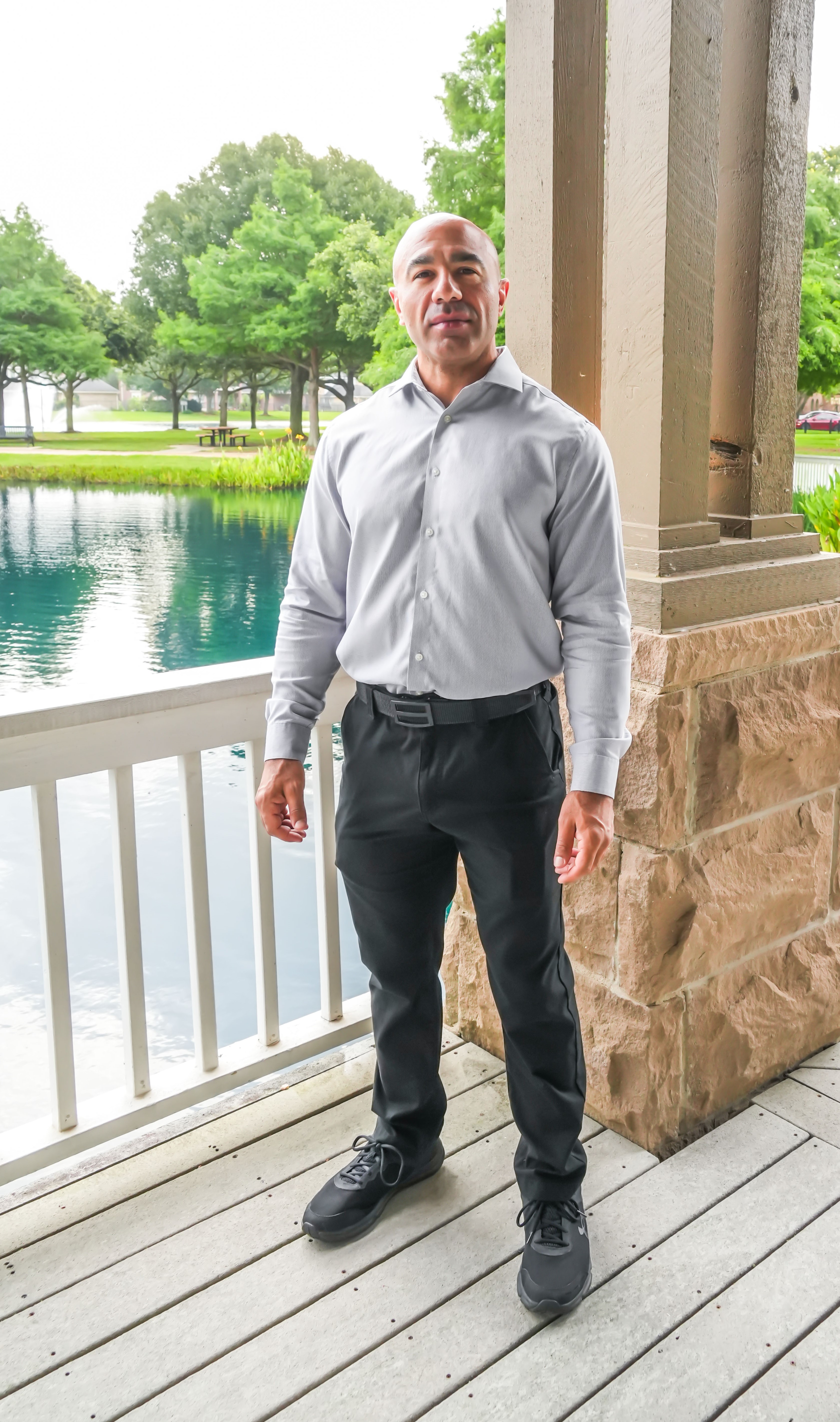
There is a specific kind of executive who reads this. He has built something. A career, a company, a reputation, a family. He has applied serious rigor to the things that matter: financial planning, business continuity, team development, health. He has thought carefully about most of the risks that could disrupt what he has built.
He has not thought as carefully about whether he is genuinely capable of protecting himself and his family in the moments that do not announce themselves.
He knows this. He has known it for a while. It surfaces as a quiet voice in a parking structure late at night, or on a foreign city street at midnight after a client dinner, or when he is responsible for someone who depends on him and the environment is unfamiliar. He does not dwell on it. He is busy. But the question is there.
This piece is about why that gap exists, why the standard responses to it do not actually close it, and what closing it actually requires.
The Gap Is Real, and You Already Know It
The executive who brings discipline and rigor to every other domain of his life is not failing to close this gap out of negligence. He is making a resource allocation decision that is, in most of his professional context, reasonable: he has finite time and attention, and the threat is abstract while the demands of the business are immediate.
The problem is that the gap does not announce itself before it becomes relevant. Business crises give signals: financial pressure builds, relationships degrade, markets shift. A physical confrontation does not. It arrives without a lead time, in an environment the executive did not choose, at a moment he did not plan for. The cost of being unprepared is not distributed across a quarter. It is concentrated in seconds.
The executive who has a response plan for every business scenario but no framework for a physical confrontation has a gap in his preparedness that his professional competence cannot fill. Title, success, and reputation are not defensive tools. Neither is the assumption that because nothing has happened, nothing will.
Why the Standard Responses Do Not Close It
Most executives who recognize this gap do one of three things.
They carry a firearm. Carrying is a serious decision made for serious reasons, and in the specific circumstances it was designed for: a clear threat at distance, with reaction time, it is a genuine capability. But the class of physical confrontations that executives actually face most often does not look like that. Situations that reach contact before the firearm is processed. Environments where carrying is not legal. Jurisdictions where the use-of-force rules are entirely different from home. The firearm addresses one scenario in a much broader set, and the executive who has only the firearm has not addressed the rest.
They attend a weekend seminar. A weekend with a skilled instructor produces real learning. What it does not produce is durable capability under stress. Capability built over a single weekend lives in working memory, not in trained instinct. Under real stress: adrenaline, noise, speed, an opponent who is not cooperating, working memory fails. What holds is what has been rehearsed until it is automatic. A weekend does not get there.
They decide it will not happen to them. This is not a framework. It is a conclusion unsupported by any analysis. It does not reduce the probability of an incident. It reduces the awareness of one.
None of these responses is unreasonable. All three are understandable given the executive’s time constraints and the way the gap presents itself. None of them closes it.
What Closing the Gap Actually Requires
After a training session at the academy, Frassetti found himself sitting against the wall with one of his purple belts: a successful professional, a frequent traveler, a person who by any external measure had built the kind of life this training is designed to protect.
The conversation turned to why the training had mattered in ways the purple belt had not expected when he started. He described a voice he used to carry: quiet, persistent, asking whether he was enough. Whether he had what it would take if the moment came. He had not told many people about it. He laughed when he mentioned it, but the acknowledgment was genuine.
He said the voice had been gone for a long time now. That when he walked into any situation, a boardroom, an airport, a street in a city he did not know, he felt capable in a way he had not before. Not because nothing could happen, but because he had a framework for how he would respond if something did. His awareness was calibrated. His avoidance instincts were practiced. His physical readiness was real, not theoretical. He had been on the ground enough times to know that the ground was not where the encounter would end. His confidence had grown beyond the mats. He said he was a better leader, a better father, a better husband. He did not say this as an advertisement. He said it as a fact.
The gap Frassetti’s training closes is not just the physical one. It is the internal one: the distance between who the executive presents as and who he actually is when the situation is real and unscripted. That distance is what the quiet voice is measuring. Closing it requires a framework, not a seminar. It requires sustained practice, not a single decision. It requires training that is built for the executive’s actual life: travel schedule, injury constraints, time pressure, real threat environment, not for a competitive athlete.
The Standard Worth Building Toward
The standard is not a black belt or a competition record. It is the ability to protect the people who depend on you, in the moments that do not announce themselves, under conditions you did not design.
That standard is achievable. It requires a framework built around five dimensions: Awareness, Avoidance, Physical Readiness, Capability, and Context. It requires time: not a weekend, but sustained and intelligent effort calibrated to what the executive’s life actually allows. It does not require becoming someone different. It requires building capability that is actually there when the situation is real.
The executive who reads this and recognizes himself has already done the hard part: he has named the gap honestly. The question that follows is a simpler one. What is he going to do about it.